

On Food, Control, Hunger, and the Sacred Table We Have Yet to Build
Close your eyes for a moment and try to locate it. The specific memory of a meal that felt like more than eating. Not expensive or complicated. Something that tasted like belonging and being witnessed. Like the earth had participated in what was on the table and the people around it knew that. They felt it, and gave some form of thanks for it that everyone present understood without being told.
Hold that memory. Now ask yourself how often you have eaten that way in your life. How often the people around you ate that way. How many generations back you have to travel before food was consistently that. Not just calories, or convenience, or survival. It was a living covenant between the human body and the world that feeds it.
For most of us the answer is: not within living memory. And that is not an accident.
The Century That Took the Kitchen
Start in the 1930s. Post-Depression America, and most of the world alongside it, is not eating from cookbooks. The recipes being passed between women scratched on paper scraps, and memorized because paper was scarce are documents of intelligence. This wasn’t poverty. They are the accumulated knowledge of which plants grow fast and produce abundantly. Of which flavor combinations satisfy when expensive protein is unavailable. Or which preservation methods carry the harvest through the months when nothing grows. Every recipe from that era is a lesson in what the human body actually needs and what the earth actually provides when you pay attention to both.
The 1940s introduced the first great compromise. Women entered the war-effort workforce and time became a resource as rationed as sugar. Factory-produced convenience foods were framed as patriotism. Where eating from a can was doing your part. The framing was sincere enough to make the trade feel necessary. It always is. Every step away from food sovereignty in the last century was presented as progress, liberation, or emergency. And each step made the next one easier to accept because the previous one had already loosened the foundation.
Post War
By the 1950s the nuclear family was being manufactured alongside the nuclear bomb. Both were designed to contain something that frightened the architects of the new order. The suburban kitchen was a monument to female isolation dressed as domestic fulfillment. The church went up on the corner, the subdivision spread across what had been farmland, and families purchased everything. Food, furniture, even identity was purchased from companies that had discovered the extraordinary profitability of the severed community. Neighborhoods designed for cars instead of walking guaranteed that the exchange networks of the older world could not reassemble themselves. The ones where seeds, homemade recipes and preserved foods moved between households as a matter of course was now a thing of the past.
The Rebels
The 1960s rebellion was real and necessary. It made a catastrophic trade. The women who walked out of the kitchen were right to leave the conditions that imprisoned them there. What was not rebuilt in their departure was any structure for holding the knowledge that had lived in that kitchen. The fermentation crocks, and the canning knowledge. The understanding of which herbs healed which ailments, and the seasonal rhythms of what you preserved in autumn so you could eat in February. The kitchen did not become less necessary when women left it. It became less occupied, and the corporations moved into the vacancy before anyone had time to notice what had been surrendered.
The 1970s inflation was the first crack in the smoke screen. The first sign that the prosperity the previous two decades had appeared to deliver was leveraged against a future that couldn’t sustain it. Recipes thinned again. Home gardens returned briefly out of genuine fear. But the propaganda was already too deeply installed. Convenience was freedom, and freedom meant not having to grow, or preserve anything, Not having to spend an afternoon turning what the season provided into something that would feed your family through the winter. The dual-income household was presented as liberation. What it actually produced was a generation of exhausted people. Whom driving through a restaurant window at ten at night was not a luxury but the only option left after the other fourteen hours of the day had been sold.

It is Now Expected
By the 1980s it was no longer presented as an option. Every adult worked. Children were managed by institutions. Credit filled the gap between what the economy paid and what the economy required you to spend to participate in it. Processed food and restaurant food were not supplementing home cooking by this point. They had replaced it entirely, except for the holiday performances that remained as cultural memory of a practice that had otherwise been abandoned. The recipe box that your grandmother kept had not been passed to anyone, and even if it had, nobody had time to open it.
The 1990s delivered the debt economy’s full flowering. Nobody could afford a home or family on a single income. The response was not to question the economic architecture that had produced that impossibility. It was to take on more debt and work more hours. The food that filled the gap was engineered to be cheap, fast, and chemically calibrated to override the body’s satiety signals. So consumption could continue past any reasonable nutritional threshold. The people who ate it were not stupid. They were exhausted inside a system designed to exhaust them. The system had made certain that no viable alternative was accessible within the constraints of the time and money it had left them.
The Non-Food
The 2000s collapse pulled the smoke screen down. The house of cards that debt had built could not stand, and what was exposed underneath it was this. After eighty years of progress, most people in the wealthiest civilization in recorded history did not know how to feed themselves. Did not have the land to grow anything. The did not have the knowledge to preserve anything. There were no community networks through which food had historically moved between households as a form of mutual provision. They did not have the money to purchase the quality of food the body actually requires to function. And they were eating, at enormous expense, a manufactured product that was making them sicker with every meal.
To Control the Masses, Control the Food
None of this happened by accident and none of it happened by conspiracy in the narrow sense. No single room of villains planned the eighty-year dismantling of food sovereignty. What happened was something more ordinary and therefore more difficult to name. It was a series of economic incentives and political arrangements that produced outcomes that served the consolidation of power and wealth. The people in positions to perpetuate those arrangements did so because it was profitable, and because no one with sufficient power had reason to stop them.
The result is that the most fundamental human need to eat, and to eat food that actually nourishes has been transformed into a dependency relationship. One between a population that has been systematically deskilled and a food industry that holds the skills the population was made to surrender. This is not a metaphor for control. It is the actual mechanism of it. A population that cannot feed itself without purchasing from consolidated corporate systems is a population that cannot effectively resist those systems. Because resistance requires the body’s cooperation and the body will compromise almost anything when it is hungry enough.
Its Bigger Than the Boomers
The Boomers did not have it better than the generations that followed them. They had a more convincing smoke screen. The debt-financed appearance of prosperity layered over the same fundamental disconnection from land, and from the seasonal knowledge. The disconnect from the community food networks that had sustained human populations for the previous ten thousand years. Gen X inherited the smoke screen and the debt simultaneously. They grew up in the specific cognitive dissonance of being told the system was working. All while watching the evidence that it was not accumulate in the bodies and bank accounts of everyone around them.

What changes now is not that the problem has been solved. What changes is that the smoke screen is down. The costs are visible. The mechanisms are nameable. The alternative is imaginable in ways it was not when the dominant culture was still successfully presenting the processed food economy as the pinnacle of human achievement. Rather than a century-long experiment in manufacturing dependency.
What We Are Actually Hungry For
The hunger that has never been adequately named in any of the conversations about food justice, food access, or food sovereignty is the hunger for meaning. Not nutrition, meaning. The hunger to participate in something that connects the body to the earth and the individual to the community through the most fundamental act of physical existence.
Every culture that maintained a genuinely healthy relationship with food over centuries organized that relationship around ritual. The harvest festival is not primitive superstition. It is the technology through which a community maintains its psychological and emotional relationship with the work of feeding itself. The collective acknowledgment that food does not arrive through a system but through a relationship. That relationship requires tending, gratitude, and the kind of seasonal attention that the Gregorian calendar’s administrative fiction was specifically designed to replace.
The Sacred Container
When the sacred container around food was removed we lost so much more than just tradition. When eating became a transaction between a consumer and a corporation we lost the covenant between a community and its place. The meaning-making structure that made the labor of growing, cooking and preserving feel like devotion rather than drudgery disappeared with it. The reason nobody wanted to cook by the 1980s was not that cooking had become harder. The labor was the same. What had changed was that the labor had been stripped of its sacred weight. Its community witnessing, and its seasonal rhythm. Its sense of participating in something larger than the individual meal. Work emptied of meaning becomes burden. The same work inside a sacred container becomes prayer.
The body knows the difference. This is not philosophy, it is physiology. It is about the meal grown in soil you know, prepared with time you chose to give, and shared with people whose faces you can see. Food eaten in the awareness that the season made this particular combination of flavors possible and that next season will bring something different. That meal feeds something in the nervous system that no amount of caloric optimization can reach. The hunger for it did not go away when the real thing became unavailable. It went underground, expressing itself as the endless dissatisfied consumption of things that promised nourishment and delivered only the next craving.
Building from Scratch, Literally
Here is the clarification that changes everything: we have not lost what we never had. The 1950s kitchen was not the model to return to. It was already the first stage of the problem. We were already disconnected from the land, and dependent on purchased ingredients. Already isolated in the nuclear home rather than embedded in the community exchange networks of the older world. The recipes of the Depression era were intelligence documents, but they were also already downstream of a longer severing. The enclosure of common land, the urbanization of agricultural populations, and the commodification of seed.
What we are building is not restoration. It is construction. New traditions built not from nostalgia, necessity or from manufactured convenience, but from deeper questions. What does the human body need? When does the earth provide it? How does the community form around its provision? And what does the sacred architecture of that formation look like inside the rhythms of the actual sky? Rather than the administrative fiction of a calendar two Roman emperors designed to flatter their own names.
The Answers are Not Difficult.
They are being worked out right now in intentional communities, and regenerative agriculture networks In urban garden collectives, and fermentation circles. With seed libraries, and the quiet kitchens of people who have decided that eating well is an act of resistance. It is serious enough to reorganize their lives around. The knowledge is available. The seeds exist. The land, in many places, is accessible to those willing to work it collectively rather than own it individually.
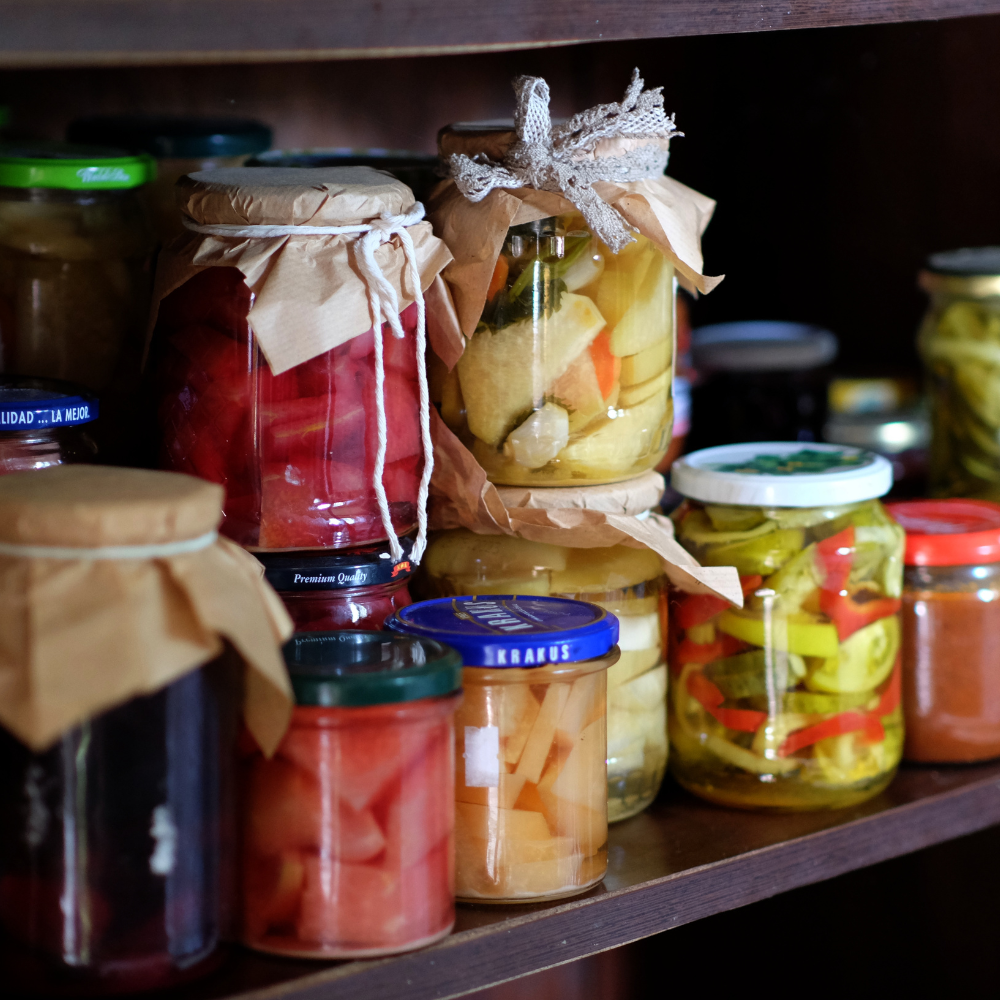
What is needed is the framework that makes it feel like what it actually is. A restoration of something the body has been hungering for across the entire century of its absence. The sacred relationship with food. The seasonal intelligence that knows the Hawthorn month calls for different medicine than the Oak month. That the body needs different things in the deep water of winter than it needs in the solar peak of midsummer. And that fermentation is not a preservation technique but a conversation between the human microbiome and the living intelligence of the earth.
Good things take time and tender care. Wine knows this. Sourdough knows this. The community that gathers around a table where both are present knows it in the bones. Even if the language for it has been lost. We are not starting from zero. We are starting from the hunger itself, which has survived everything the last century threw at it. And which is, right now, the most reliable guide available to us about what we are actually being called to build.
The Home Economics of the New World
Can propaganda be good? Yes. When it tells the truth and points toward sovereignty rather than dependency. The strategic deployment of story, image and repetition in service of a population’s genuine flourishing is not manipulation. It is medicine delivered at the scale the illness requires.
The story has heroes. They are not exceptional people. They are every person who has ever grown something and felt the specific satisfaction of that labor in the hands. Every person who has made something from scratch and discovered that the capability was always there. Waiting to be called forward. Every child who has watched something planted become something eaten. How they understood in the body what no classroom can teach about the relationship between care and nourishment. Every family that has gathered around food that took time and intention felt that something real was happening that no drive-through could replicate.
Those People are in Every Generation.
The hunger did not skip anyone. The skills were not permanently lost. They were set aside in circumstances that made them feel impossible, and those circumstances are changing. The Great Transition is dismantling the economic architecture that made food dependency feel inevitable. In the rubble of that dismantling, the question of how to actually feed a family, a community, and even a bioregion, is how to do it in relationship with the land’s actual rhythms. And the body’s actual needs with the season’s actual offerings. This is the most practical and most sacred question available.
The Crossroads Movement
The Crossroads Movement is building the curriculum for this. Not a cookbook or a gardening guide. The sacred architecture of food as a living practice. The seasonal framework, the fermentation and preservation knowledge. The community exchange structures, combined with the spiritual and emotional relationship with the act of feeding and being fed. All embedded in the thirteen-month calendar’s actual rhythms. Offered to the transition leaders across all fifteen sectors who understand that the new world cannot be built on the same foundation of manufactured dependency that the old one used.
The table is the first community infrastructure. It has always been there in every other form of collective life. In governance, economy, education, medicine, art, spiritual practice, etc. It is downstream of the question of who eats together, what do they eat, who grew it, and who prepared it. What understanding of the world and their place in it they bring to the act of eating.
The smoke screens are down and the hunger is visible. The knowledge is recoverable and the sacred container is buildable.
We begin with the seed and the table. With the people willing to gather around both with the understanding that what they are doing is not a lifestyle choice but an act of civilizational reconstruction. Good things that take time, and absolutely, uncompromisingly on fire with the importance of what it is.
Blessed Be
Kristi
High Priestess of Agape Covens
Founder, The Crossroads Movement
agapecoven.com
Explore the Crossroads Movement and the 15 Sectors
Book an Agape Scrying – Multi-Dimensional Soul Reconnaissance for Transition Leaders
Join the Scrolls of Agape Newsletter – Crossroads Movement Dispatches for Transition Leaders
Connect with us on our Agape Covens Substack
The crossroads are here. The torches are lit. Let’s walk.