On the War Against Independence, the Architecture of Control, and Why the Rebellion Is Now Inevitable
JUNE 2026 | COVEN OF THE EARTH’S STEWARDS • COVEN OF QUINTESSENCE • COVEN OF THE DIGITAL DRUIDS • COVEN OF THE BALANCE KEEPERS
THE CROSSROADS MOVEMENT
Worldly Watchtower | Current Events Through the Lens of the Great Transition
Something is being documented here. This is not speculation or prediction. It is being documented in real time, as it unfolds across the legal codes and municipal ordinances. Across corporate terms of service and regulatory frameworks of a civilization that has decided it is not finished extracting.
The extraction mechanisms are in their final phase. Not because they are succeeding, but because they are desperate. What looks like control is actually a last contraction. The last systemic attempt to close every door before the people who have been looking for exits find them. The Great Transition is not a metaphor. And what is happening to the people trying to build their way out of the old world is not coincidence. It is a coordinated, if not always consciously coordinated, reflex of a system that has built its entire architecture on dependency.
The Worldly Watchtower is naming it plainly.
THE INVENTORY: WHAT THEY ARE COMING FOR
Begin with what they already hold. Power. Water. Food at scale. The supply chains and the distribution networks. The processing facilities and the seeds themselves, many now locked behind intellectual property protections that make saving and replanting the crop your great-grandmother grew a legal risk. The pharmaceutical systems. The financial rails. The communications infrastructure. These are not incidental concentrations. They are the legacy architecture of a civilization organized around dependency as a feature, not a bug.
Now watch what is being targeted next.
The right to fix your own things.
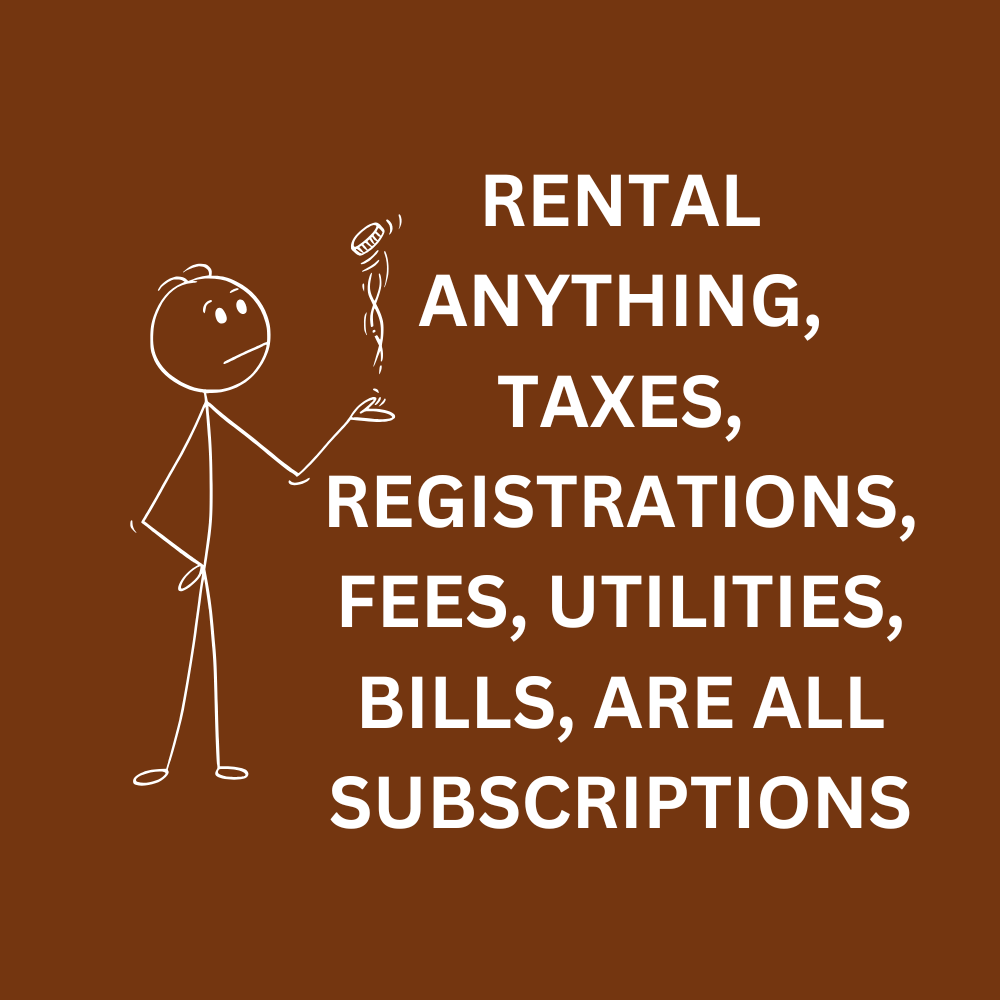
Manufacturers have spent decades using software locks, parts pairing, proprietary diagnostic tools, and warranty voiding threats. All to ensure that when your phone breaks, your tractor fails, your car throws a code, or your medical device needs adjustment, only they can touch it. The legal battles around Right to Repair have been grinding through state legislatures for years precisely because the stakes are enormous. Federal legislation, the Fair Repair Act for electronics and the REPAIR Act for vehicles, all moved forward in early 2026. The counter-pressure from manufacturers is immense and ongoing. What is embedded in this fight is not merely consumer convenience. It is the question of whether the people who own things are permitted to maintain what they own. Or whether ownership itself has been redefined into a subscription to a service someone else controls.
The right to collect the rain.
Water rights law in the western United States dates to the nineteenth century. When the doctrine of prior appropriation gave water ownership to whoever claimed it first. Not whoever needed it most, or whomever the land belonged to. Not even the community downstream. Several states still restrict residential rainwater collection through limits on quantity, storage method, and permitted use. The restrictions are presented as conservation or sanitation concerns. The underlying logic is that water falling from the sky onto your roof belongs, in some legal sense, to an allocation system that predates your presence on the land. The rain is not yours.
The right to grow and trade food.
HOA enforcement actions against backyard vegetable gardens are accelerating across the country in 2026. They are targeting raised beds, compost systems, rain barrels, and native plant landscaping that violates aesthetic uniformity standards. Selling or trading produce from a home garden is the foundational act of every pre-industrial community food system. It is now running into licensing requirements, cottage food laws with strict limits, and in many jurisdictions direct prohibition. The grandmother selling tomatoes at the end of her driveway is, in more and more municipalities, an unlicensed food vendor operating in violation of code.
The right to live outside the approved housing format.
Living full-time in an RV or camper van on your own land is illegal in residential zones across most of the country. The mechanisms vary. Zoning ordinances that define dwelling as a structure with a permanent foundation. Municipal codes that limit stays to fourteen days without a permit. HOA restrictions that prohibit any vehicle not classified as a standard automobile from residing on properties. Cities that have escalated enforcement as housing costs rise and more people attempt to exit the conventional rental market. The pattern is identical everywhere. As soon as a sufficient number of people begin living outside the approved system in a way that threatens the tax base or the property value framework, the regulatory response tightens.
The right to know what is in your own equipment.
Vehicle telematics, the data your car generates about location, speed, driving behavior, engine diagnostics, route history, and dozens of other parameters, is being contested in courts and legislatures across the country. Who owns that data? The person driving the vehicle, or the manufacturer who designed the system that collects it? The answer, in most current frameworks, is the manufacturer. The independent repair shops fighting for access to diagnostic information are fighting the same battle. The data your vehicle generates is being used to route you back to authorized dealers. Away from independent technicians who could do the work for less money.
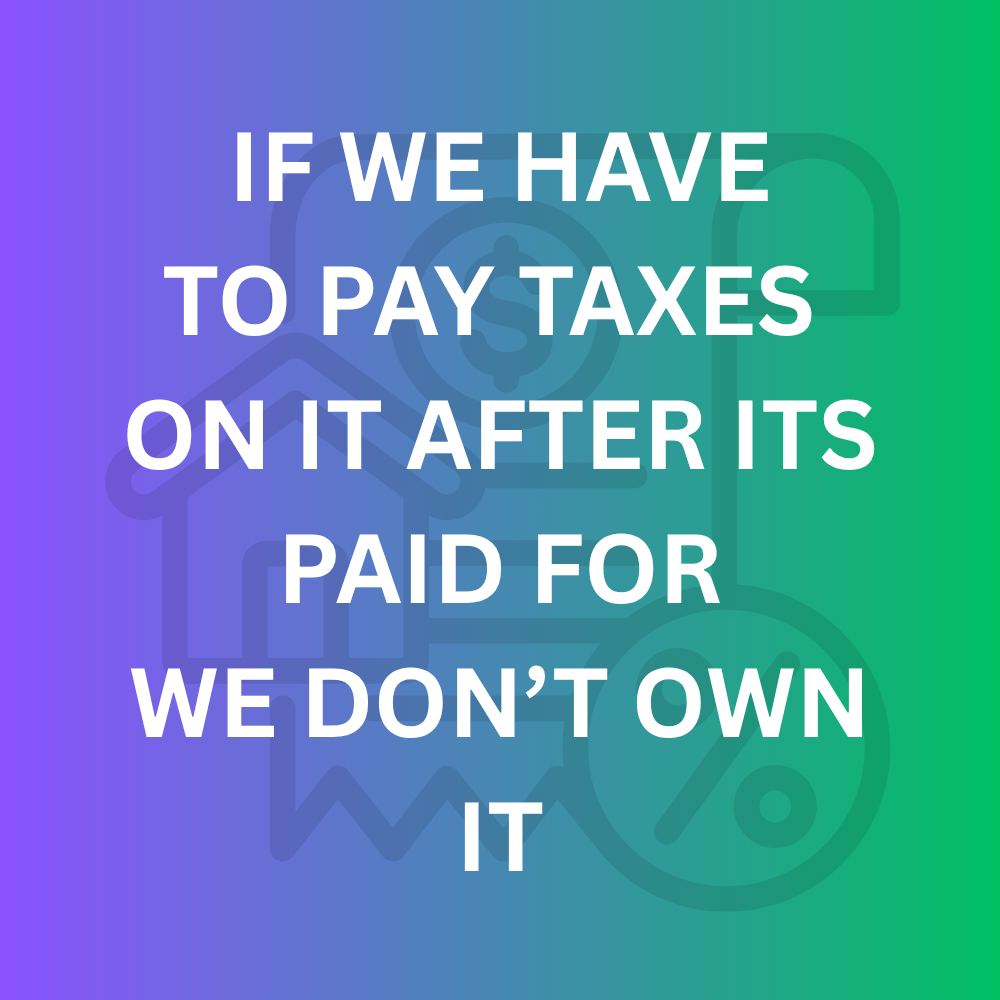
THE MACHINE THAT IS EATING THE WATER
While the regulatory apparatus is contracting around the individual’s capacity to be self-sufficient, the infrastructure of data collection is consuming the very resources, electricity, water, & land. Resources that ordinary people are being told they cannot independently access.
Data centers consumed an estimated 448 terawatt-hours of electricity globally in 2025. That is more than the entire country of Saudi Arabia uses in a year. In the whole country of Ireland, data centers accounted for 21% of total metered electricity. That is more than all urban households combined, which forced the national grid operator to pause new approvals around Dublin until 2028. In Virginia, data centers consume 26% of the state’s total electricity supply. American utility companies are warning that the infrastructure required to meet this demand will appear, eventually, on residential electric bills.
The water numbers are more unsettling. Global data centers required close to a trillion gallons of water in 2025 for cooling operations. A single large AI data center can consume up to five million gallons per day. By 2030, projections from the United Nations suggest AI-related water consumption could supply 500 million people in Sub-Saharan Africa. The data centers storing surveillance footage, processing behavioral targeting algorithms, and running the software locks that prevent you from repairing your own washing machine are drinking from the same aquifers your community depends on. All while you are being told the rain that falls on your roof is not yours to collect.
This is not a coincidence. It is the operating logic of the extractive system made legible. The infrastructure of control requires enormous resources. Those resources come from the commons. And the commons is simultaneously being fenced off from the people it belongs to.

WHY THIS MOMENT IS DIFFERENT
These restrictions are not new. Many of them have been on the books for decades. What is new is the convergence. The moment when enough people simultaneously realize that the approved pathways are not adequate to their actual lives, and begin looking for the exits at the same time.
The housing market has made conventional homeownership functionally inaccessible to a generation of working people. The healthcare system has priced preventive care out of reach for a significant portion of the population. The food system has revealed its fragility repeatedly. Through pandemic supply shocks, climate events and consolidation that has reduced the number of companies controlling the majority of any given commodity to a number that fits on one hand. And people have responded by planting gardens, buying camper vans, learning to fix things, collecting water, and building networks of informal exchange.
That response is what is being targeted. Not because gardens and campers are threats in themselves, but because the aggregate of millions of people reducing their dependency on the extraction system represents a genuine structural threat to a system built entirely on that dependency. When the person who was supposed to buy the produce, pay the mechanic, rent the apartment, and subscribe to the streaming service instead grows the food, fixes the car, lives in the van, and builds a local network of exchange. These people have exited the system in the only way the system cannot easily absorb.
The regulatory tightening is not coordinated in a boardroom somewhere, though certainly advocacy and lobbying play their roles. It is the organic response of a system whose nervous system senses the exits being found and reflexively moves to close them. This is how systems in contraction behave. This is also, historically, the moment just before the pressure exceeds the containment.
THE CRACKDOWN ON BUILDERS OF THE ALTERNATIVE
The transition leaders, the builders of the alternative, are not abstract. They are the farmer at the county fair who cannot sell the honey without a certified kitchen. The family living on their paid-off land in an RV while they save to build a permanent structure, receiving a code violation notice. The herbalist who cannot call herself a healer without a license issued by the system whose medicine she is not practicing. The community organizer building a neighborhood food forest who discovers the city classifies the trees as a nuisance. The repair technician who cannot access the diagnostic software needed to work on the vehicles her customers bring in.
These are not edge cases. They are the standard experience of anyone attempting to build the alternative economy, the alternative food system, the alternative housing model, and the alternative community structure that the Great Transition requires. The friction is systematic because the system is systematic. Every layer of the regulatory architecture was built around a particular model of how resources flow. On how transactions occur, and who is authorized to perform which functions. And who owns the outputs. The alternative economy violates every assumption that architecture was built on.
The rebellion is not coming. It is already here, quietly, in every garden planted without HOA approval, and every repair made without manufacturer authorization. In every water barrel installed without a permit, and every van parked on owned land with a family sleeping inside it. The question is whether it remains quiet.

WHAT THE WATCHTOWER SEES FROM HERE
A volcano of emotion is about to erupt. The pressure is real, documented, and has been building from multiple directions simultaneously. The mechanisms designed to release it all safely, political reform, regulatory reform, and corporate accountability, are moving far too slowly to match the rate of accumulation. Historically, when systems reach this configuration, one of two things happens. A genuine structural reorganization, or a rupture that produces the reorganization by force.
The Crossroads Movement exists precisely for this juncture. Not to accelerate the rupture. To build enough alternative infrastructure that when the rupture comes, if the rupture comes, there is something to move into rather than a void to fall through. The sector covens exist because transportation, housing, medicine, food, economics, governance and technology do not fail separately. They are the same system, and they will transition together, in relationship with each other, or they will not transition at all.
Document your alternative builds. Know your local regulations, not to be stopped by them, but to understand exactly what territory you are navigating. Know where the genuine openings are. Build in networks, not in isolation. The isolated builder is vulnerable. The networked community of builders is the body that survives the transition.
The permission you are waiting for is not coming from the system that is contracting. It was never going to come from there. The permission is the act of building itself. The rebellion is the garden and your diy repairs. The rebellion is the rain barrel and the camper. It is the shared meal and the informal trade. The knowledge passed from neighbor to neighbor without a license, a fee or a subscription.
Name it clearly. Document it precisely. Build it anyway.
REFLECTION QUESTION FOR TRANSITION LEADERS
Where in your own infrastructure, your food, your water, your shelter, your tools, your knowledge, have you reduced dependency on the extraction system? And where is the next exit you are building toward?
Blessed Be
High Priestess of Agape Covens
Founder, The Crossroads Movement
Explore the Crossroads Movement and the 15 Sectors
Book an Agape Scrying – Multi-Dimensional Soul Reconnaissance for Transition Leaders
Join the Scrolls of Agape Newsletter – Crossroads Movement Dispatches for Transition Leaders
The crossroads are here. The torches are lit. Let’s Build.